Episode Transcript
[00:00:00] Speaker A: Foreign.
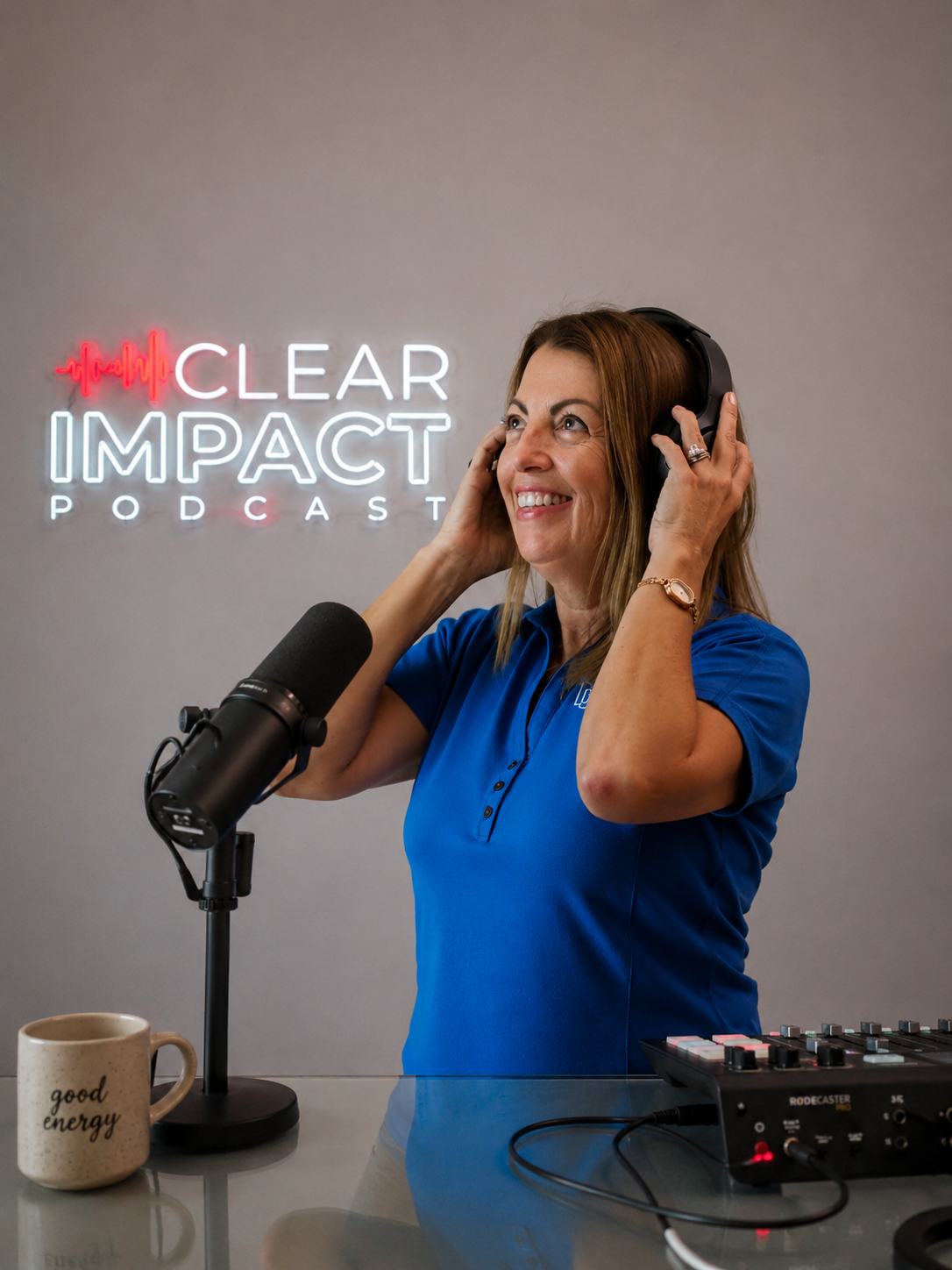
[00:00:09] Speaker B: Welcome to the Clear Impact Podcast, brought to you by Mitre Brands University. Thanks for joining us today. My name is Sheri Conner and I am your host.
[00:00:19] Speaker C: We have a couple more really cool products in the longer term product pipeline that will enhance that whole house package even more. But as I was saying before, you can now take the aesthetic of what we've always done, that modern contemporary architecture, very glass heavy. And it doesn't only have to be in the Southwest anymore. Now it works in those colder climates, the Pacific Northwest, the Mountain states, the Northeast, places where people would love to adapt this architecture but really functionally couldn't do that with an aluminum product. So now you can.
[00:00:51] Speaker A: That's amazing.
Good afternoon. We are here on the Claire Impact Podcast and I'm recording over the phone today with Brian Lazarowitz. Welcome.
[00:01:01] Speaker C: Hey, Sheri, how are you today?
[00:01:02] Speaker A: I'm doing well. I'm doing well.
So excited that we could have this conversation. There's been a lot happening on the western side of the business. But before we tackle all of that, I would love for our listeners to hear a little bit about you. If you'd like to share some of your background and your experience and then your current role and responsibilities.
[00:01:24] Speaker C: So my name is Brian Lazerowicz. I'm the VP of Sales with Western Architectural Openings. Notice that new name.
I've been with the business for about eight and a half years at this point. We've met previously through PGT in a relationship. So you've got an understanding of my background, but more or less I've been in the industry for about 36 years at this point. You know, various roles from manufacturing, delivery, field service, installation. But really the bulk of my career has been in sales and sales leadership, not quite evenly split between commercial and residential, but the past eight years has been mostly residential. And I really love what we're doing most recently with Western Architectural Openings because we get to really combine some of the coolest components from both categories and channels into what is now a premium luxury fenestration brand.
[00:02:19] Speaker A: Yeah. That's amazing. I know. I was super impressed with your background and I think you started while you were still in elementary school. If I remember right, your family was involved in a business and you have the Fenestration Masters certification, which is no joke. We've looked at the curriculum on that and so you definitely know your stuff and I'm thrilled to have you talking to us today. And so there's a new name, there's a new logo, there's a new positioning, I guess in the market, if you want to call it that. Tell us your thoughts about the new name and the new logo.
[00:02:53] Speaker C: Well, so in terms of positioning, I would say it's more of a refocus than a repositioning. We've been in a category that we're focused on for longer than I've been here at Western. But now we're really putting all of our energy behind approaching the luxury segment specifically. And now that we're part of the Miter Brands network, there are other brands that we've coordinated with and are currently collaborating with to take over some of the other channels that we've worked through in the past at Western so that we could really dial into what we think we excel at. So if you look at it, over the past year or so, we've been really focused on assessing and recalibrating all of the customer touch points that we've developed through what is about seven decades of growth of the Western business. And we're focusing on positioning ourselves for the future in what has become really a segment that more competitors are consistently attracted to. So we're asking the question with what we've learned and what we can still learn as a leader in our segment, how do we provide the best customer experience, bar none, in the luxury aluminum category? What does that look like? And more importantly, what does that feel like for our customers? And those customers being our dealers, the architect and design community, custom builders, and then of course, the end user. When we look at the new name and the new logo, it's been a really amazing process to participate in. So our marketing and sales teams went through a comprehensive review and survey process where we studied our customers. Again, that's dealers, architects, custom builders. Additionally, we studied the behaviors and preferences of luxury category consumers. So not just in fenestration related universe, but in comparable and sometimes even completely unrelated industries to establish what's important, what is absolutely critical and what could differentiate our business while still honoring the history and the heritage of our 67 year old brand.
[00:04:46] Speaker A: That's amazing. I didn't realize there was all of that research behind it. I guess that makes sense.
[00:04:50] Speaker C: Yeah, big investment, a lot of time spent and a lot of focus and it's been just really fun collaborating with the team on that.
[00:04:57] Speaker A: Nice. So tell me about the new name. Where did that come from?
[00:05:01] Speaker C: Yeah, great question. So the name Western Architectural Openings elevates our brand beyond just windows and doors and it connects us to the architecture and design community. And as I said earlier, I come from a highly technical commercial fenestration background. You Know, custom engineered curtain wall window wall architectural windows designed for high exposure, high rise applications.
And if you study the CSI Master Format Specification Manual Division 8, it is called Openings. So CSI Master Format Division 8 captures all openings. Every product really, that creates and manages a hole in a building envelope. So we're adopting a more descriptive name for what we do. And it's interesting because our products and our projects tend to be more about how to create these functional, you know, these holes in the building envelope that are, well, both functional and emotional connections from inside to outside through that building envelope. And in so many cases, the coolest part of our products is when you can't even see them because it's a moving glass wall that retracts into a pocket, removes the barrier between indoor and outdoor, and just creates this third space.
[00:06:14] Speaker A: Yeah, no, that's amazing. So do you pronounce it wow? Because we were kind of.
[00:06:19] Speaker C: No, we don't.
[00:06:19] Speaker A: No, we were kidding around about that. Like bao buns are B, A, O, or like maybe it's wow, that's not a bad idea.
[00:06:27] Speaker C: Maybe we should do like Friday. Wow. B funds or something like that.
No, we refer to it as Western. I mean, that's what the industry knows us as. Again, it's 67 years in the making and you know, it's well established as a brand that focuses on this category. So we want to leverage that, keep that comfort level with our customers. Have been tried and true through the years and are used to Western.
[00:06:47] Speaker A: Right.
[00:06:48] Speaker C: And also the logo. So I mentioned that third space. Right. So the new logo, it does honor that W legacy. You know, you can see the W in the logo while it's also symbolizing this connection between indoor and outdoor. So if you look at it really closely, you get the sense of this intertwined third place. I love it. It's been really embraced with our customers that are understandably a little tense about making any changes. But so far it's been really, really well adapted. So we love it.
[00:07:18] Speaker A: Yeah, it's very sophisticated.
[00:07:20] Speaker C: Thank you. That's what we're going for.
[00:07:21] Speaker A: Yeah, that's the impression that I had when I first saw it and I was like, oh, very classy, very upscale. Definitely portrays luxury, which is obviously what you're going for. So I want to talk about the Vantage line for a bit. This is a relatively new line for you, for the Western family, and you just recently finished that off with the new door. But I do want to just touch briefly on the other products that are in this line. If you want to talk about those
[00:07:49] Speaker C: so yeah, the Vantage line. Let's talk about, about the practicality part of what we do. I'm comfortable saying I'm a certified product nerd. I love product innovation. But to be very clear, you know, innovation without purpose or duty of care is just irresponsible and generally bad for the customer, for our industry, for our business certainly. So we've really looked at developing the Vantage collection primarily to evolve the current core products that we have.
So we've developed it to enhance the esthetics, the performance, the functionality and also importantly the manufacturability because we're only good if we're reliable. Right. So we want to be able to manufacture on time, complete, in full, almost at 100%. We're not quite there. I don't know of anybody that is, but we're awfully darn close.
So, you know, we looked at our core product types and developed this. Vantage line is a platform to continue to be able to add additional incremental product types sort of using the same design language and goals. So we wanted the cleanest sight lines we could get the most daylighting, the lowest U factors without using very complex glass makeups to stay ahead of energy code requirements and actually also make the product work in multiple geographies that would have loved to use our product in the past, but they just wouldn't comply with code. So, you know, also incorporating the most updated and functional hardware and accessories that we could source or in some cases we just designed our own because they didn't exist. So yeah, we've launched now our full window line. So we've got our fixed and window wall products, we've got casement and awning, we have a pass through awning and that's important. We've been building pass through window systems for decades. You know, whether that was a multi slide door, a bifold window that was set on a bar top, but we've designed our 8665 pass through awning window. You know, to have the cleanest aesthetic option with the biggest clear opening for that type of application. So when it's closed, it's a big picture window. You know, there's no vertical interlocks or styles interrupting the view. And then when it's open, it connects your kitchen or your entertainment area to the exterior, all with the narrowest sight lines that we could potentially build and the configurability of the rest of our Vantage window collection. So you can maul it to any window wall.
Really, really cool product. Recently we launched our 8900 hinge door. So that hinge door is now available with a 3.0u factor without again using any super complex glass makeups. So the more complexity we put into the glass, the lower the U factor and we can get to very, very, very meaningful thermal performance for markets that again, could not use an aluminum hinge door in the past. It's got a cleaner finish, narrower sight lines, a lot of field adjustability built into it so that the installer can make those final adjustments in the field to make it actually work the way the homeowner wants it to. And then of course, the introduction of electronic smart locks, which virtually everybody is asking for. At this point,
[00:10:55] Speaker B: we are sharing our expertise around all topics relating to the window and door industry. Whether you are a customer selling our products or a homeowner doing research, the Clear Impact podcast provides helpful content that makes an impact. Subscribe today wherever you listen to podcasts.
[00:11:12] Speaker A: Yeah, that's quite an accomplishment. And so I'm assuming that you're using some sort of thermally improved aluminum on these.
[00:11:20] Speaker C: We are, yeah. And in some cases combinations of different thermal brake constructions. I'm not going to get too much into it because it's a little, I don't want to say proprietary, but we've done a lot of homework to put together the systems that we have and achieve those U factors. So if you want to figure it out, go study like we did.
[00:11:38] Speaker A: Yeah, well, I do have a couple of episodes coming up with the engineering teams that worked on this. So if we can get more detail that's appropriate to talk about, I'm sure they'll be happy to share that information when we chat next week. Great. And so now there's a sliding door too, right?
[00:11:54] Speaker C: Correct. Yes. We just launched our multi slide door actually in conjunction with the brand launch that was a few weeks back. So the Vantage multi slide door, it's our 8600 product. Kind of takes that core product that we're known for, that multi slide door, and enhances it again with very, very low industry leading, really U Factors again without 4th surface low ease added. We can hit California title 24, we can hit Northeast NFRC code required. U factors upper Midwest markets where we really couldn't put a multi slide door before.
So incorporating narrow sight lines, large panel sizes, that excellent operating force at Western is known for. Very easy to operate, right?
[00:12:36] Speaker B: Mm.
[00:12:37] Speaker C: It's highly configurable, but we've introduced some proprietary hardware changes and then I think the most exciting part to me is we've got an integrated water Management system in what we would consider a flush or concealed still track. So you can have that indoor outdoor transition with no interruption and still manage water.
[00:12:58] Speaker A: Wow. Okay. That's a big concern, especially when you are talking about a door. Right. You don't want your new hardwood floors being ruined because there wasn't a good sill management.
So that's amazing. What are the sizes on those? Just out of curiosity.
[00:13:13] Speaker C: So we'll do up to a 5 by 12 foot tall panel.
[00:13:15] Speaker A: Okay.
[00:13:16] Speaker C: And iterations of that depending on aspect ratio.
So it's pretty typical for us to see 3 or 4 foot by 12 foot tall panels. More construction. Especially in the markets that we focus on, you see a lot of single story construction with very high ceilings and people want those 12 foot openings. And then we've got products in the Vantage window wall line that if you want to add, you know, clear story above, that's become a pretty standardized design as. So you get that whole back wall of your home that is just completely view at daylight. And in cold weather climates. Now the cool thing is, you know, these products are generally meant to open up your back wall, but in those cold weather climates now you can actually use this system to still get the view. You still might have an incredible view and you still want the natural daylight. But now when it's closed, it actually behaves in a way that supports your environment. Like I said in the Northeast, the Mid Atlantic, the upper Midwest, places where you wouldn't have considered these products in the past. So that's really exciting for us.
[00:14:17] Speaker A: That's amazing. PGT does do a 12 foot door slider.
[00:14:20] Speaker C: If 12ft excites you wait for what's next.
[00:14:25] Speaker A: Yeah. Something bigger than that would just be. That would be crazy.
That would be crazy.
[00:14:30] Speaker C: Well, let's get a little crazy but still be responsible. Right. We've seen designs out there that just are absolutely amazing. They're stunning to look at. You know, operating them is a different story. And you have to, you know, really for the average homeowner to operate them, you have to introduce automation and things like that, which is totally doable, but just the practicality of it. You have to think about all that in the upfront design process.
[00:14:53] Speaker A: Right.
[00:14:53] Speaker C: And then there is again that duty of care. We don't want to build something that's in any way going to endanger anybody. Right. The physics have to work too.
[00:15:02] Speaker A: Sure.
[00:15:02] Speaker C: So that'll be an interesting conversation and topic with Kevin when you talk to him.
[00:15:06] Speaker A: Yeah. I think Richard also is going to be doing a session with me. So between the two of them, we'll get into the nitty gritty on it. So let's zoom out just a little bit. How does the Vantage line, what need does that fill in the market for our customers?
[00:15:21] Speaker C: Again, it's taking what we know, taking those core products that have enabled us to provide design assistance on a complete fenestration package.
So we fill the window openings, we fill the door openings, both hinged, sliding patio door multi slide, the operable windows, the casements, the awnings, now the addition of the pass through awning window. We have a couple of more products and I'll let the fellas get into that when you get to that point. But we have a couple more really cool products in the longer term product pipeline that will enhance that whole house package even more. But as I was saying before, you can now take the aesthetic of what we've always done, that modern contemporary architecture, very glass heavy. And it doesn't only have to be in the Southwest anymore. Now it works in those colder climates, the Pacific Northwest, the Mountain states, the Northeast, places where people would love to adapt this architecture, but really functionally couldn't do that with an aluminum product. So now you can.
[00:16:19] Speaker A: That's amazing. And so is that what you're most excited about in this line or is there something more?
[00:16:24] Speaker C: There's always something more, but I'm not going to give it away.
[00:16:26] Speaker A: Okay.
[00:16:26] Speaker C: But no, just the ability to stretch into applications that are outside of our historic comfort zone, but still responsibly.
[00:16:34] Speaker A: Right. Well, I can imagine from an architect's perspective, you know, here they have a homeowner who's designing something that is really outstanding and they really have to depend upon the supplier being able to produce what their vision is. Right. You can have this great vision, but if nobody can build it that way, or if the glass doesn't come in those sizes or meet the code requirements, then they have to sacrifice. Right? They can't have this enormous view or this massive opening.
And so now there's that collaboration where you really can meet their dreams.
[00:17:11] Speaker C: We are listening intently to what the architectural community is asking for and trying to do our best again to design responsibly. But think about that. What's next concept and it's been a lot of fun.
[00:17:23] Speaker A: Yeah, that is fun stuff, especially for us window nerds.
There have been a few self proclaimed window nerds lately around here.
[00:17:31] Speaker C: So it's a badge of honor. Yeah, it is a badge of honor.
[00:17:34] Speaker A: Yeah. Well, it's good to excel in what you do, whatever that is. So Ours happens to be windows and doors and other opening solutions. So. Anything else about the Vantage line or about the name or the logo?
[00:17:45] Speaker C: No, I think we're good.
[00:17:46] Speaker A: All right, so I have one final question for you, and this is something I've been asking a lot of guests lately on the podcast, and that is what is your favorite Mitre DNA statement? And it's okay if you have more than one.
[00:18:01] Speaker C: No, this is a good one. And of course, everybody has more than one. They're really well thought out and cover so many aspects of what we do every day. But the one that I. Especially in the current state that we're in, with as many changes as we've been working through, I love to focus on we dream big, set goals, and get to work. And I just. Personally, I love to think strategically. Probably like a lot of other people who would really prefer to just kick back and daydream about what's next than to keep grinding on the same process the same as it ever was. I'm not satisfied with that. I don't think our teams collectively are satisfied with that. And the way that we've always done things should and must always be subject to change. And so, you know, in thinking about that, we dream big, set goals, and get to work. The thing that's impressed me the most most about Mitre brands in the two years since Western was acquired through the PGT acquisition is that there's a true sense that your dreams and input are not only appreciated and expected, but if you can apply the logic to that dream and construct a framework to make it a reality, then that dream is celebrated, and you're provided with extraordinary resources to get it done. So that's been just a huge win as part of the Mitre brands integration. Tons of fun.
[00:19:20] Speaker A: Yeah. And you see it play out right. You see it in all different ways across the business. That's one of my favorites as well. I like that. Where you can really think outside the norm and challenge the status quo and, you know, see where it takes you.
[00:19:35] Speaker C: Best part of our jobs.
[00:19:36] Speaker A: Yeah, exactly. All right, well, Brian, this has been a great conversation. Thank you for shedding some light on what the new name and logo mean to the customer base out west and now everywhere. Not just in the Western stratosphere, not just Arizona and California and Utah, but largely. I didn't know that we could do that. Your products would be all the way in the Midwest and in the Northeast and Mid Atlantic had no idea. So that's amazing.
[00:20:05] Speaker C: Well, here we go.
[00:20:06] Speaker A: Here we go. All right. Well, I appreciate your time. Thank you so much.
[00:20:10] Speaker C: Thanks, Sherry. Appreciate you.
[00:20:11] Speaker A: All right, take good care.
[00:20:14] Speaker B: The Clear Impact podcast is brought to you by Mitre Brands Universe.
We are a part of Mitre Brands, a family of leading window and door brands united by our passion for quality and relentless pursuit of 100%. At Mitre Brands, our common purpose is to deliver value by manufacturing the finest products, services and customer experience every day, everywhere. Our window indoor brands deliver regionalized expertise, products and services, all backed by a national company.
Mitre Brands University is here to educate you, our listener, so that you can be a more informed consumer of window and door products.