Episode Transcript
[00:00:00] Speaker A: Foreign.
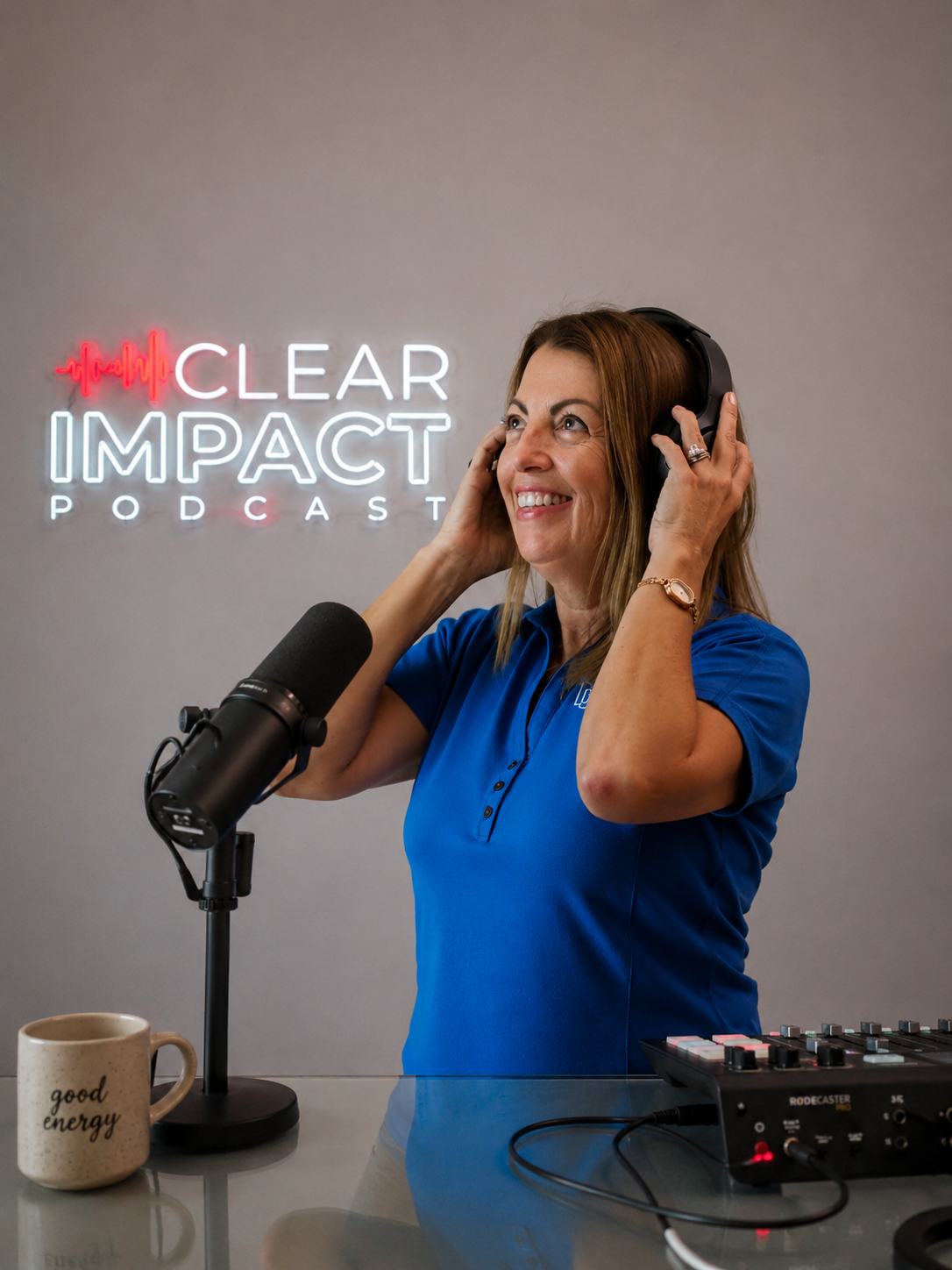
Welcome to the Clear Impact Podcast brought to you by Mitre Brands University. Thanks for joining us today. My name is Sheri Conner and I am your host.
Good afternoon. We are here on the Clear Impact podcast and we are chatting with Chris Hewitt today. Welcome to the studio.
[00:00:33] Speaker B: Good afternoon. Thanks for having me.
[00:00:34] Speaker A: Yeah, thanks for making time. And so, Chris, tell us a little bit about your background, your history, your tenure and then we'll talk about your current roles and responsibilities.
[00:00:44] Speaker B: Sure, yeah. So outside of Mitre Brands, started my career in the Midwest working in heavy machinery manufacturing actually. So probably half of my career with that company was in the operations space. Actually started out on the shop floor, so was putting large earth moving equipment together. And company was kind enough to put me through school, got my business degree, went through a rotational program there where you spent some time in engineering and a little bit of time in sales and operations. And really once I got into operations, never got out, so kind of got stuck there partially by my own choice. Really loved that work and really spent half of my career with that organization in an operational role and moved around a bunch of different places in the Midwest and a little bit on the east coast. And then they had asked me to take a transfer down to Georgia and jump into a quality role.
So spent several years in a divisional quality role there, based out of Georgia but supporting primarily the Southeast and East coast and left that organization and went to work for a powertrain company, so similar manufacturing and supported the Southeast primarily and went a little off the reservation after a few years there and went into construction management and really worked driving kind of lean concepts and a quality mindset at a company that built hospitals and power generation plants and big industrial applications, things like that. And then was recruited into PGTI about four years ago. Now Mitre Brands are part of Mitre Brands and have been here for almost four years now.
[00:02:15] Speaker A: Nice. Yeah, I was just a little ahead of you, but not by much. So what is your current role and responsibilities?
[00:02:21] Speaker B: Yeah, so current role, I support our Southeast locations primarily. There's really kind of three legs to the stool, so to speak.
One is compliance. These are really the must do, can't fail items. Things like nfrc, ama, safety glazing, Miami Dade, those types of things. And then kind of that second leg would be really championing the Mitre way of operations specific to the quality cog and really third would be connecting the voice of the customer and sales feedback to our operations team in a way that they can kind of understand and really articulate what customer expectations truly are. With the operations background that I have for half my career, you know, it's really easy to speak in a context and in a way that the operations team can really kind of understand and digest.
[00:03:07] Speaker A: Yeah, it all works together, right?
[00:03:08] Speaker B: Yeah. I mean, and another way to think about it kind of. In other words, really, at the end of the day, my role is to help teams do what we say, understand and exceed customer expectations and build a culture of quality.
[00:03:19] Speaker A: And so your responsibility is largely the PGT brand.
[00:03:23] Speaker B: Yeah, pgt. Anything in the Southeast, primarily. And then obviously we support some of the islands, things like that. But PGT definitely is the lion's share of what I focus on today.
[00:03:32] Speaker A: All right. Which is not a small operation.
[00:03:34] Speaker B: It is a big part of the MARTA organization, for sure. Very complex.
[00:03:38] Speaker A: Yeah. 48 or 49 products in our. More than that now. I don't know. I have lost count since we added Scout and Sparta. But there have been a lot of changes lately and we've been talking about since CGI lines have merged into the PGT family and CGI's no longer, and picking and choosing and keeping some of the products, setting up existing equipment into new locations, rearranging what was here. There's just been a lot happening out on the production floor and just a lot of new faces and personnel and just a lot of changes. And so I know with quality being one of our main pillars, I'm curious to hear what is involved for your team when we're making those kinds of changes. Yeah, sure.
[00:04:21] Speaker B: There's obviously a lot of work that the support functions have around large changes like that. But I would say probably the most impactful is. I'll use some fancy kind of lean speak here, but the plan Do Check, ACT cycle, or PDCA would be the lean acronym.
[00:04:35] Speaker A: Plan Do Check, act, act.
[00:04:38] Speaker B: Okay. And I'll translate that into something a little bit more meaningful. So last year, when we announced that the CGI products were going to be transitioning up to Venice, we went out proactively to the customer base and with the sales team. And we really had some intentional conversations with key customers around Sparta and scout and the 160 and the 450 products, talking about what would they like to see change? What are the things that we want to make sure that we don't lose in that transition. And really not so much focused around the engineering of our products. Dean's team kind of handles that piece of it, but really more around what are the things from a product. Cleanliness, packaging, presentation, these types of things that we can make sure we take the best from both facilities. So not only is the transition seamless, we want to make it a positive for the customer. At the end of the day, they're having a better experience because of that transition. So we went out, got that feedback, then brought that feedback back and worked hand in hand with the operation team to say what are the things we can put in place, what do we want to get out ahead of us, what are the investments we need to make, whether that be in training, equipment, so on and so forth to make sure that when we make this transition again, the idea is we want to make sure we're exceeding our customers expectation. So we went through and now that products are here in the Venice location, we're really in the thick of kind of the hands on shop floor support where we're really helping the teams to understand customer expectations. We've already worked to define those and we're really more on the product validation prior to sending all the products out, making sure that we are again providing a product and experience that not only meets but exceeds the customer expectation. And we're on the very early stages now. Customers are receiving an experience and installing these products now manufactured in the Venice location. What's been their experience? What are the things that we need to make sure we're tweaking, what did we think we had under control but maybe we missed? And a lot of that feedback honestly is very positive on the initial delivery. And then that cycle kind of starts all over again. So we get that feedback from the customer, then we bring that back to the plant again and we make new plan and it's part of that continuous improvement cycle. So again, that's probably one of the most important element that my team supports.
[00:06:45] Speaker A: Right, that's interesting. I didn't realize that you guys were involved on the front end with the customers when it was first announced. And that's so much better than just waiting until six months goes by and then saying, oh, in the transition we lost this or we forgot that or we missed an opportunity to improve on this. Like so smart to be on the front side of that.
[00:07:05] Speaker B: If you think about it, solving problems is great and everybody likes to recognize the firefighter. Right. But really preventing those from impacting a customer in the first place is really the hard work. So I think being proactive in getting ahead of it, just having open and honest conversations with our customers and sales team gives us some of that information to be armed with. Come back to the operations team and put together a plan that hopefully prevents a lot of those issues. Versus like you said, reacting to them after the fact.
[00:07:30] Speaker A: Yeah. Oh, so smart. I love that. So kudos to your team, first of all, because that's amazing to have that connection and to be proactive. I love that about what we're doing here.
So last week I heard about a new packaging for the vinyl and I poked around a little bit and said, okay, I want to know more about this. We need to talk about this on the podcast. And so Benji nominated you as the first person to speak to about that.
[00:07:58] Speaker B: Sure he did.
[00:07:58] Speaker A: And so tell us about. It's a protective film that's going on Wingard vinyl or Energy View vinyl or both.
[00:08:04] Speaker B: Yeah. So for our premium finishes, in context of the conversation, we're talking about our cap stock materials. So bronze and black, whether it be two tone or black on black or bronze on bronze.
[00:08:15] Speaker A: For vinyl though?
[00:08:16] Speaker B: Yeah, for vinyl, vinyl finishes, any cap stock material. And the customer feedback for a long time was around some of the challenges with getting that product from the end of the assembly line installed in the final application without vinyl transfer or scuffing or just marks in kind of general nicks that are picked up along that process.
So one of the things that we benchmarked actually out of Mitre, which again, this is just part of the Miter way of operations and Miter DNA, the benchmarking kind of best practices approach was to really look at applying a protective film on those finishes to make sure that we can get those to the endpoint and install in a home or building intact. So the capstock protection materials, that's a film, basically it's a white or a blue film that's applied really has transformed really the experience that customers have with that premium finish. The amount of touch up and cleaning of that product that customers do today compared to leaving that unprotected really is night and day difference. So early stages, I think that launched roughly mid December.
So as customers have flushed out their inventory and gotten anything that has shipped, really from the holiday time period till through today, they will start to see that protective film on those capstock finishes.
[00:09:37] Speaker A: We are sharing our expertise around all topics relating to the window and door industry. Whether you are a customer selling our products or a homeowner doing research, the Clear Impact podcast provides helpful content that makes an impact. Subscribe today wherever you listen to podcasts.
That's awesome. And so are there any downsides to the film?
[00:09:59] Speaker B: Yeah, operations team has to apply it. So in this case, Chris Roof, who's the director of operations here for the Venice team, was in full Support. Have really good relationships with the operations team. Spend a lot of time with them on the shop floor and understanding the impact to them. But bringing the voice of the customer to those operations teams in a way that makes sense to them is what enables some of these changes to move forward. They have a lot of confidence that we're bringing the right feedback from the customer base to them. So if we bring a project up in front of them, there's very little pushback to implementing something like that. But yeah, it does take a little time and effort in the manufacturing operations to make sure that cap stock is clean prior to application of that protective film. But yeah, we're well ahead of it now and we're off to the races at this point.
[00:10:40] Speaker A: Nice. And I read somewhere where it's supposed to be removed after a certain amount of time.
[00:10:44] Speaker B: Yeah. The guidance is storage for up to six months and then removed immediately upon installation. So it's not designed to be a long term protection during the construction cycle for new construction, so to speak. We want to see that film removed as soon as the product's installed.
[00:10:58] Speaker A: Yeah. And our lead times right now are fairly good. I think it's three or four weeks or maybe up to five for capstone,
[00:11:04] Speaker B: depending on the product. But yeah, pretty tight, especially where we've been historically.
[00:11:08] Speaker A: Yeah. So if they've got the permits in hand and everybody's ready to go, you know, they've got plenty of time then to get it installed before the film needs to come off.
[00:11:17] Speaker B: Absolutely.
[00:11:18] Speaker A: Yeah. I know things always take longer than you plan.
And so what is something that you're the most excited about regarding the product changes that we've been making?
[00:11:28] Speaker B: For myself and my team, I'd say it's the simplification. So if you think about resource being finite in a way, you're taking those resources and now focusing them on bringing the absolute best products at the highest quality to the market versus trying to bring all products to the market. So for my team and the teams that we support in operations and sales and of course ultimately supporting the customer, just being able to focus on really what's critical, what's most important, what is our best product and making sure we're doing that at the very highest level.
[00:11:58] Speaker A: Yeah. And you don't have to be spread so thin 100%. Our team feels like that too. Like, oh, we can condense some of these courses. We don't have to try to keep creating new courses. And for the sales team and for the customers to just remember everything about every product and to have such a huge portfolio to choose from. It's smart.
[00:12:17] Speaker B: Consolidating the footprint helps as well. Again, you're just localizing those efforts and kind of maximizing that throughput out of those same group of resources. So we were fortunate enough to see a lot of the workforce and support functions that were in the Miami area transfer to Fort Myers in Venice to support those products. So really we're able to keep the best and the brightest with those products as well.
[00:12:39] Speaker A: Yeah, I read that as well. I thought that was awesome.
And I think this area is nicer than Miami. But that's just my opinion. I'm not knocking anybody that loves Miami. And so over overall, how do you see these product changes affecting the Florida business?
[00:12:53] Speaker B: Yeah, I think in the context of what our customers would experience, I would say for sure this is going to be a better experience from an on time in full, more consistent moving forward. You should see much faster response times from our service and support teams with a consolidated and streamlined product offering and then really specific to our operations team just being nimbler. So when we have fewer products to focus on, again, bringing those best products to market at the highest level of quality, just being able to focus on those select few allows us to move and pivot faster. So yeah, I think the supporting teams will benefit from that as well.
[00:13:29] Speaker A: Yeah, I think so too.
Anything else on quality that we haven't touched on?
[00:13:34] Speaker B: I think we've covered quite a bit.
[00:13:35] Speaker A: All right, well then we're going to get to the last two questions. And this has been part of the We Are Florida campaign. And so what does we are Florida mean to you?
[00:13:44] Speaker B: So for me, being part of the greater than 65% of us Floridians that were not born in Florida. So I'm from the Midwest, all over the place, but primarily the Midwest and South.
So for me, Florida is what I've experienced since I've been here. And I can tell you when I first came here roughly four years ago, joined PGTI at the time and Hurricane Ian hit just after I had come down here. So a whole new experience. So coming from the Midwest, you have tornadoes occasionally and maybe once every 10 years one comes close to you and you see some stuff. And this concept of every single year hurricanes bearing down on you was different. But I would say after the hurricane hit, just to see the sense of community, the after storm support that was offered by not only local resources, but from the organization itself. How we supported our employees, how we supported the community was just something I had never experienced before. Working with some other companies in the past, and it really kind of lit a fire within me. This is the place to be. I mean, what an amazing thing. We're building products in Florida, Fluor Floridians. I'm building products at any one of our Southeast plants that are going into my neighbor's home. And as you drive down the street, you see buildings and condos, whatever it may, even our commercial products, and just understanding that you really are truly having an impact on the community that you live in. So it's important to remember, too, that we're not only building the products here, but they're designed here. Right. Our design teams sit here and they live here, and they go through all these weather events alongside us. So really exciting to be part of that, for sure.
[00:15:15] Speaker A: Well, and then they go out and do post storm evaluations, too, and take that feedback and work in conjunction with universities and other entities to try to make them even better and to evaluate what's failed and what doesn't work. And, you know, so there's that whole side of it, too. We're right here for all of that. I'm from the Midwest, too. Remind me where you're from.
[00:15:35] Speaker B: Just outside of Chicago, originally. But like I said, I've moved around Indiana. Four or five different facilities in the Illinois area. And like I said, after that was in Georgia. I got halfway here to Florida with that move.
[00:15:45] Speaker A: Yeah, I grew up in eastern Iowa, so, yeah, I know all about tornadoes and thunderstorms and all that, but, yeah, hurricanes are a whole different animal. And then the last question, and this has been really fun to get to understand where people are resonating with the Mitre DNA.
And so I'm curious, which of those statements is your favorite?
[00:16:04] Speaker B: So, of course I'll bend the rules. I'm not going to just pick one statement if I had to. But I would say, first off, I think what's important to think about, they're really more than just words on a page. And I know that's kind of tongue in cheek to say that, but when you walk into we're roughly 20ish facilities around the United States, and you walk in and you really feel it kind of every day, everywhere, in practice. Right. So it's really more about what you feel and see and hear versus kind of what you read on the page, so to speak. So the two that I would say resonate with me is we question the status quo and have a bias for action. So if I think about that, where do I see and feel and hear that consistently? And I'll give kudos to Chris Davis and his leader or his group of leadership down here in the Southeast. When you walk into the plants and you spend time on the shop floor, and that's where I spend the bulk of my time is down here with these operations team. You're not talking in, you know, months and years, you're talking hours, days. Right. And that's just a different level of thinking. And when that team sees an opportunity, it's not, hey, yeah, that'd be nice to do one day. And we put a pin in that, put it up on the board with the other 12 things we'd like to do one day. It's, well, how do we do that? Let's get that done, let's do it now. And that team drives with a sense of urgency. So I think just that biased for action really speaks to what the MITRE leadership drives kind of day in and day out.
The other one, and I'll paraphrase a little bit, but we focus on the opportunities, not the obstacles. So again, how I see that in our different facilities is really the conversation is, how can we not this is why we can't or this is why we haven't in the past. It's really, how do we do this thing we want to do? Right. The customer says they'd like to see this, or, you know, this would be really great if we could manufacture in this way or if we didn't have to pick up this 800 pound panel, whatever it may be. Right.
And it really just changing the conversation to how can we from why we can't is just a different way of thinking. And it's definitely infectious. And again, you feel it at any minor facility that you go.
So I'd say those are the two that probably resonate with me and that I feel on the shop floor when I'm visiting.
[00:18:04] Speaker A: Yeah, it's definitely more than just words on a page. And I've been in a few different facilities now and interacted with people from, you know, the MI team and from the Milgard team. And everybody's in this mindset of, well, let's fix it, let's make it better. And like, we don't need to talk about it in the next meeting. That's not for another three weeks. Like, let's get on it.
[00:18:26] Speaker B: Yeah. And I think when you translate that into customer experience, and I'm fortunate enough, I get to spend a good deal of time with our customers and with our sales team, it's hard for them, especially if you think about the industry that we're in and customers that just make very tactical and immediate decisions. In a lot of cases, at the end of the day, it's simple enough. Right. And when they say, well, why can't you just change this? Why can't you just do this thing? And there's a hundred reasons why you can't. Right. And why things take time. But at the end of the day, if you think about the simplicity of what they're saying, hey, can you move the label from the outside of the window to the inside?
Well, yeah, we can. That's a pretty easy move, right? Yeah. There's some things that we need to do behind the scenes to make that happen. But again, that doesn't need to take months or years. Those things can be hours, days, weeks. And that's just the difference.
[00:19:10] Speaker A: Yeah. Oh, it's so much smarter to have it on the inside. Anyway, Chris, thank you so much for your time today. Thank you for sharing your insight on the quality piece and how that relates to everything that we've been doing around here and always appreciate having you in.
[00:19:23] Speaker B: Thanks for the invite.
[00:19:23] Speaker A: All right, thanks, Chris.
The Clear Impact podcast is brought to you by Mitre Brands University.
We are a part of Mitre Brands, a family of leading window and door brands united by our passion for quality and relentless pursuit of 100%. At Mitre Brands, our common purpose is to deliver value by manufacturing the finest products, services and customer experience every day, everywhere. Our window and door brands deliver regionalized expertise, products and services, all backed by a national company.
Mitre Brands University is here to educate you, our listener, so that you can be a more informed consumer of window and door products.